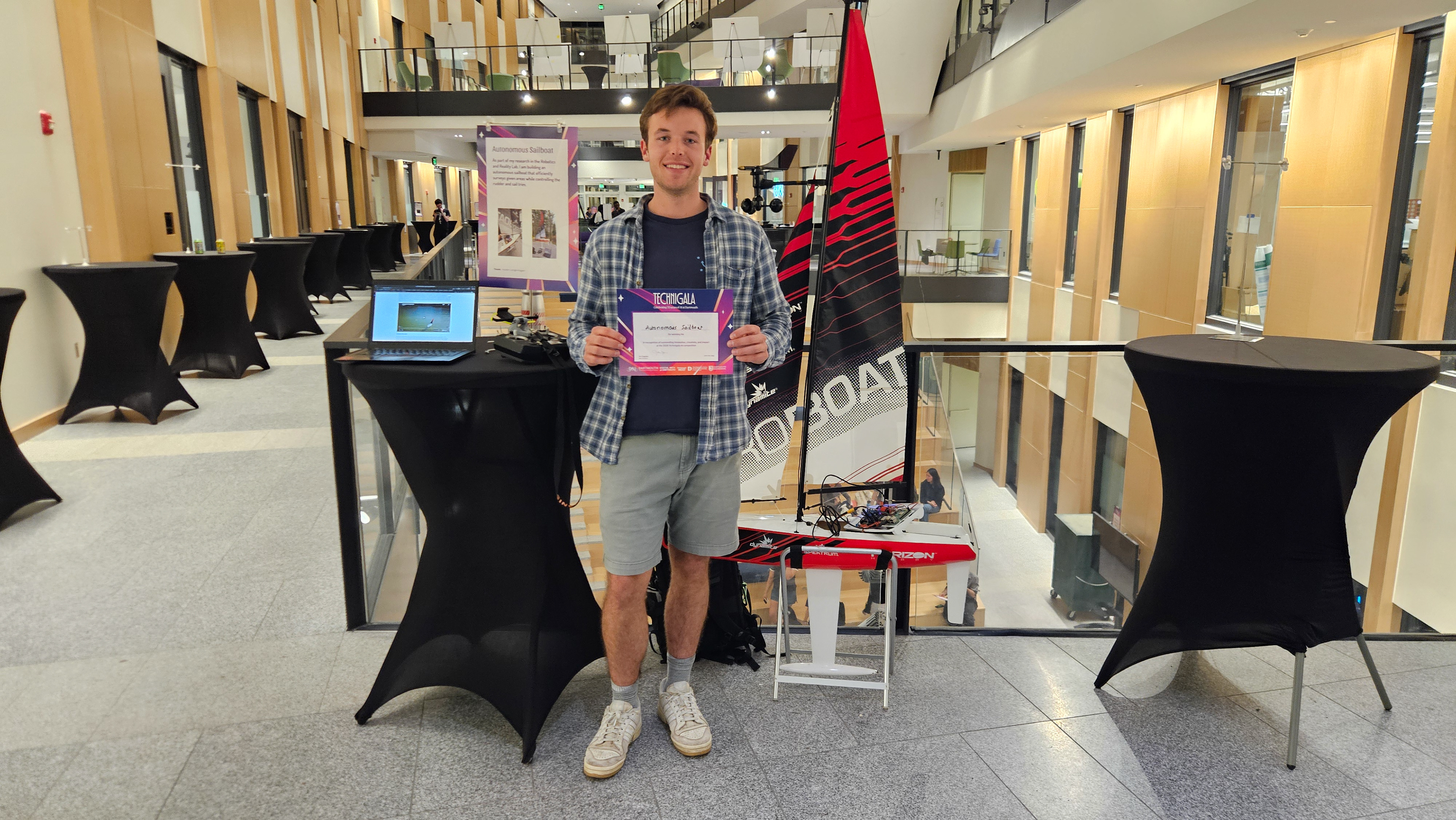
Autonomous sailboats have been used for multiple years to perform long-range environmental monitoring without need for refueling. This 1-meter robotic boat is designed for researching path-planning algorithms for such systems while steering and navigating independently of human input. This system was originally built by Ben Wolsieffer as part of his honors thesis. After years sitting unused, my goal was to restore the boat back to functionality to enable further research into coverage path planning algorithms. Under the guidance of Professor Alberto Quattrini Li in the Robotics and Reality Lab, I led the recommission of its hardware and software stacks, reaching on-water field deployment within 6 weeks. I won the Best Project in the category of Physical AI out of nine teams at Technigala 2026, judged by an industry panel.
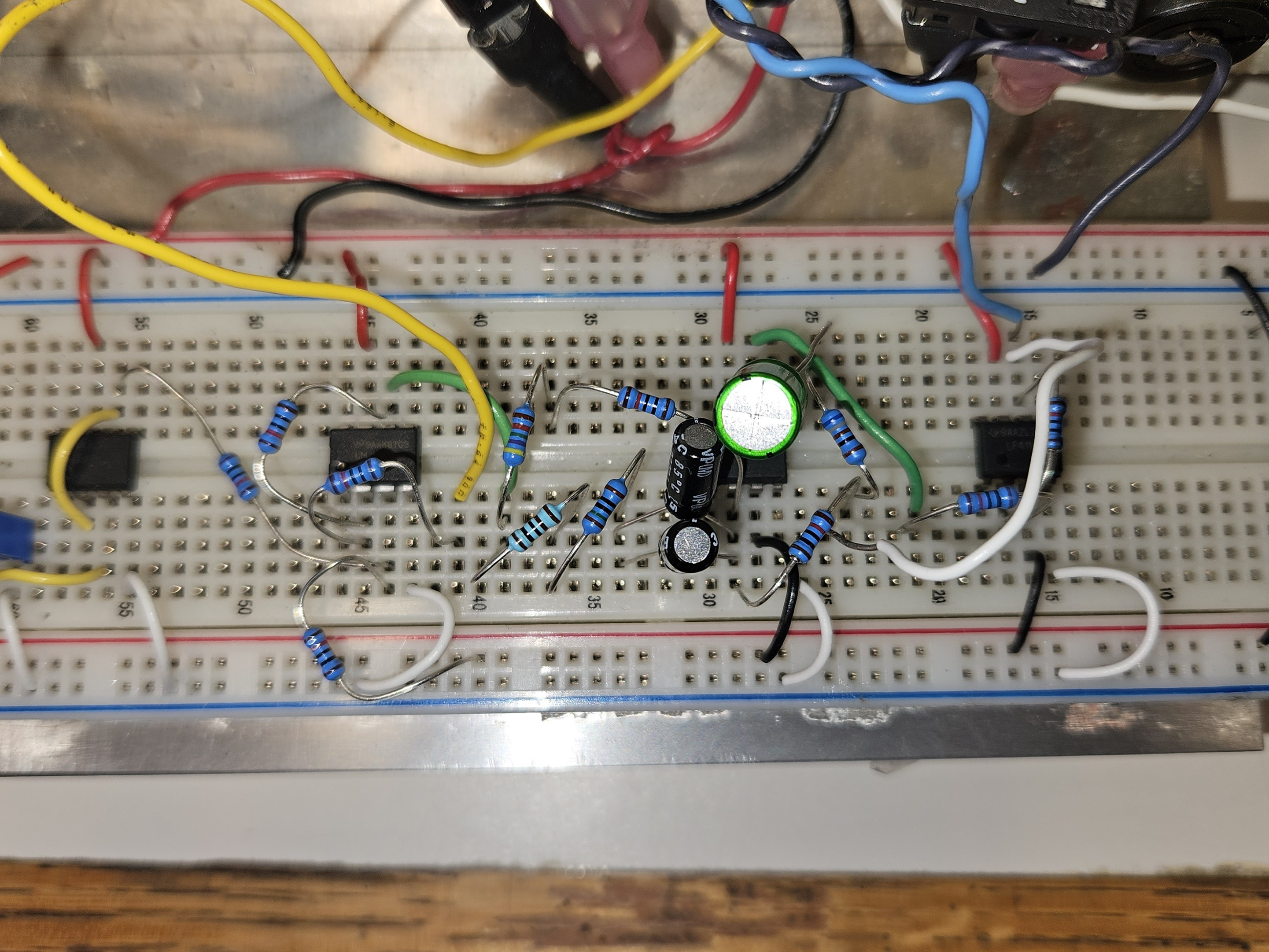
I rebuilt the full robotics hardware stack with a Pixhawk flight controller, Raspberry Pi companion computer, GPS/compass, anemometer, rudder and sail-trim servos, RC and telemetry radios, and LiPo power module. I additionally bench-tested sensors and power systems with an oscilloscope and soldered custom wiring. I configured Pixhawk and ArduPilot firmware using Mission Planner and MAVProxy and established a MAVLink telemetry link for real-time in-field monitoring and parameter tuning. Through post-test log review, I also diagnosed EKF sensor-fusion failures due to electromagnetic interference and built shielding to minimize it.
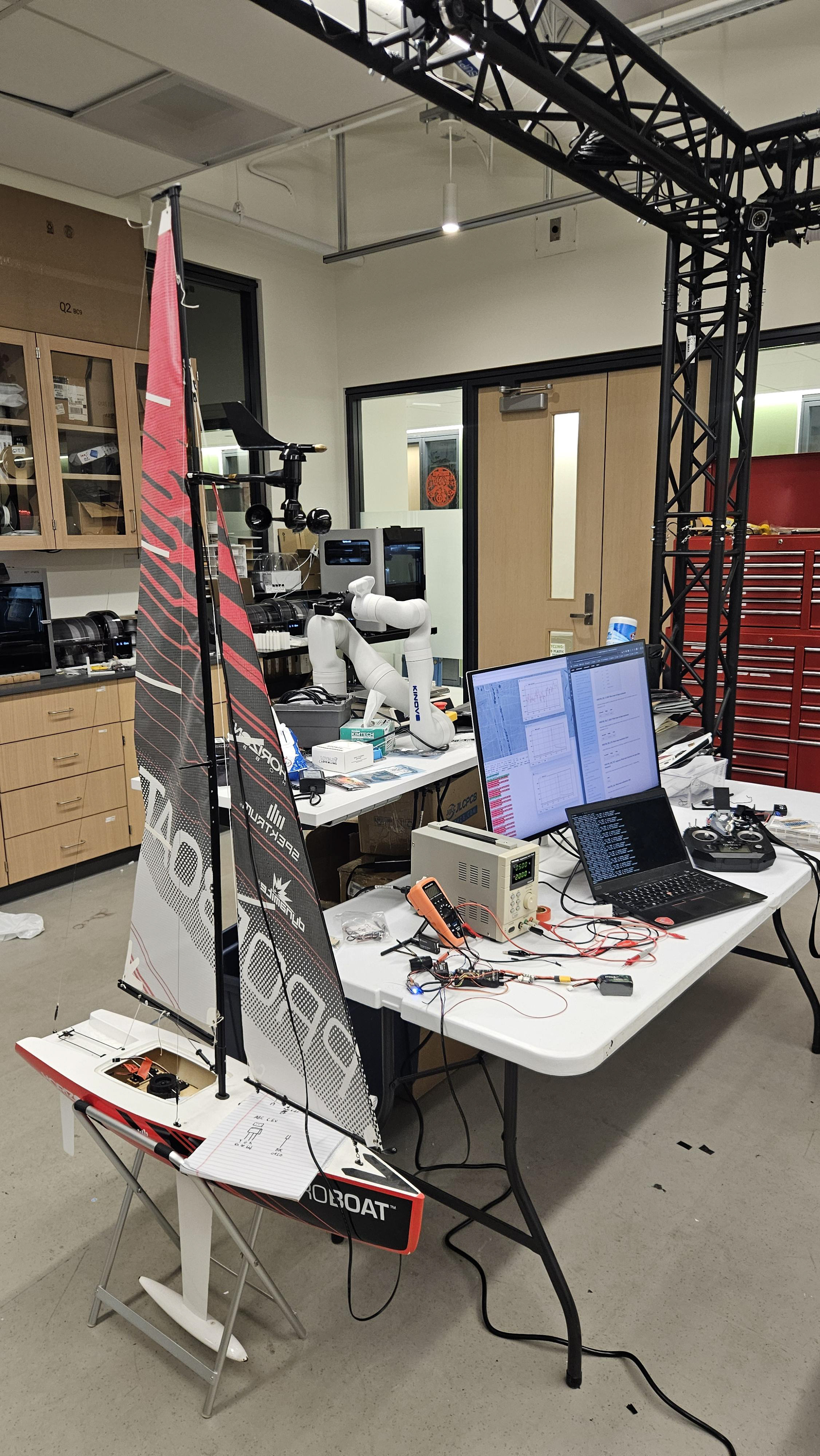
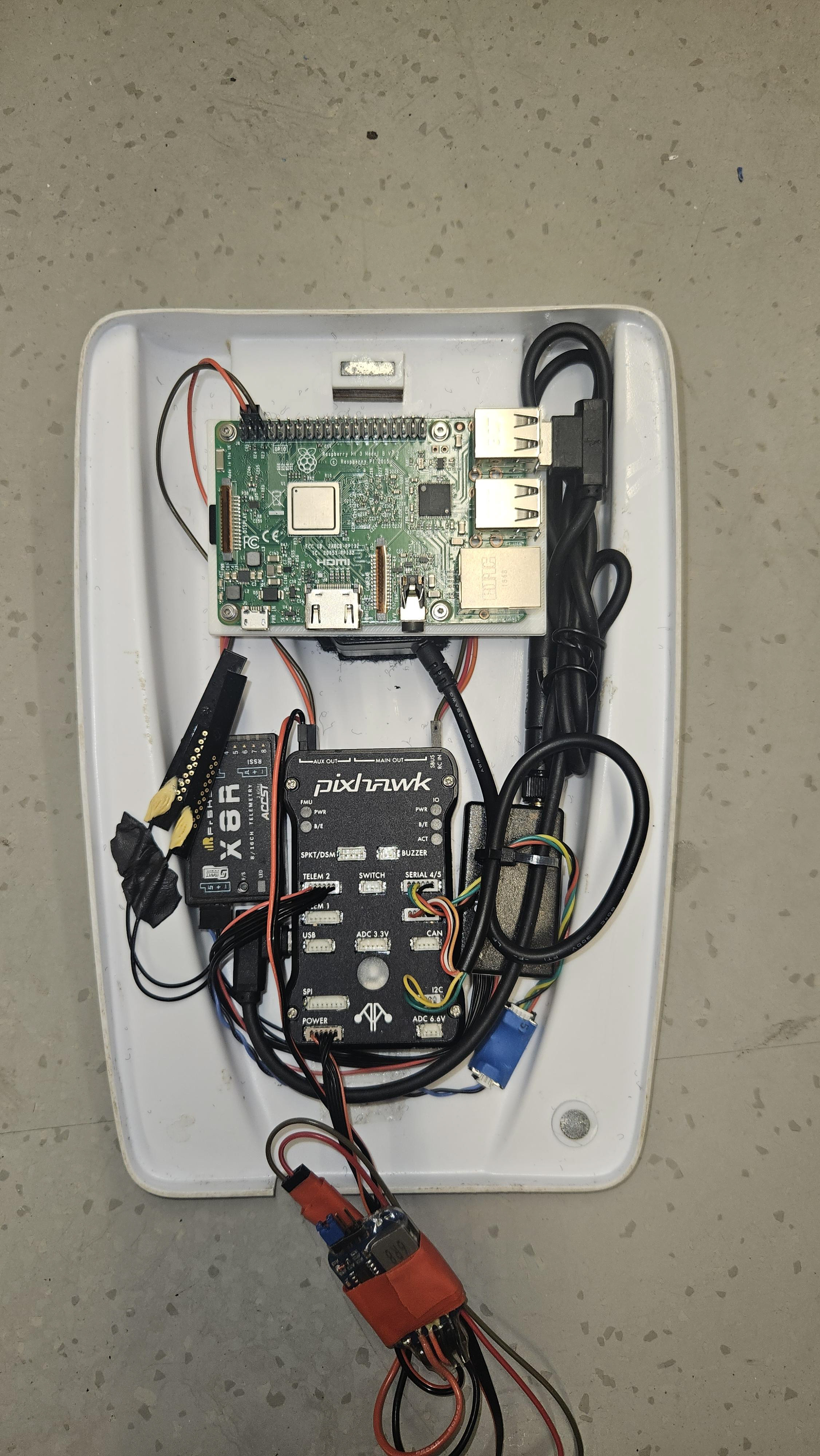
For the software stack, I configured a ROS 2 and ArduPilot SITL simulation environment in Docker for future development and validation of autonomous coverage path-planning algorithms. Github: https://github.com/holden-langenhagen/sailboat-sim
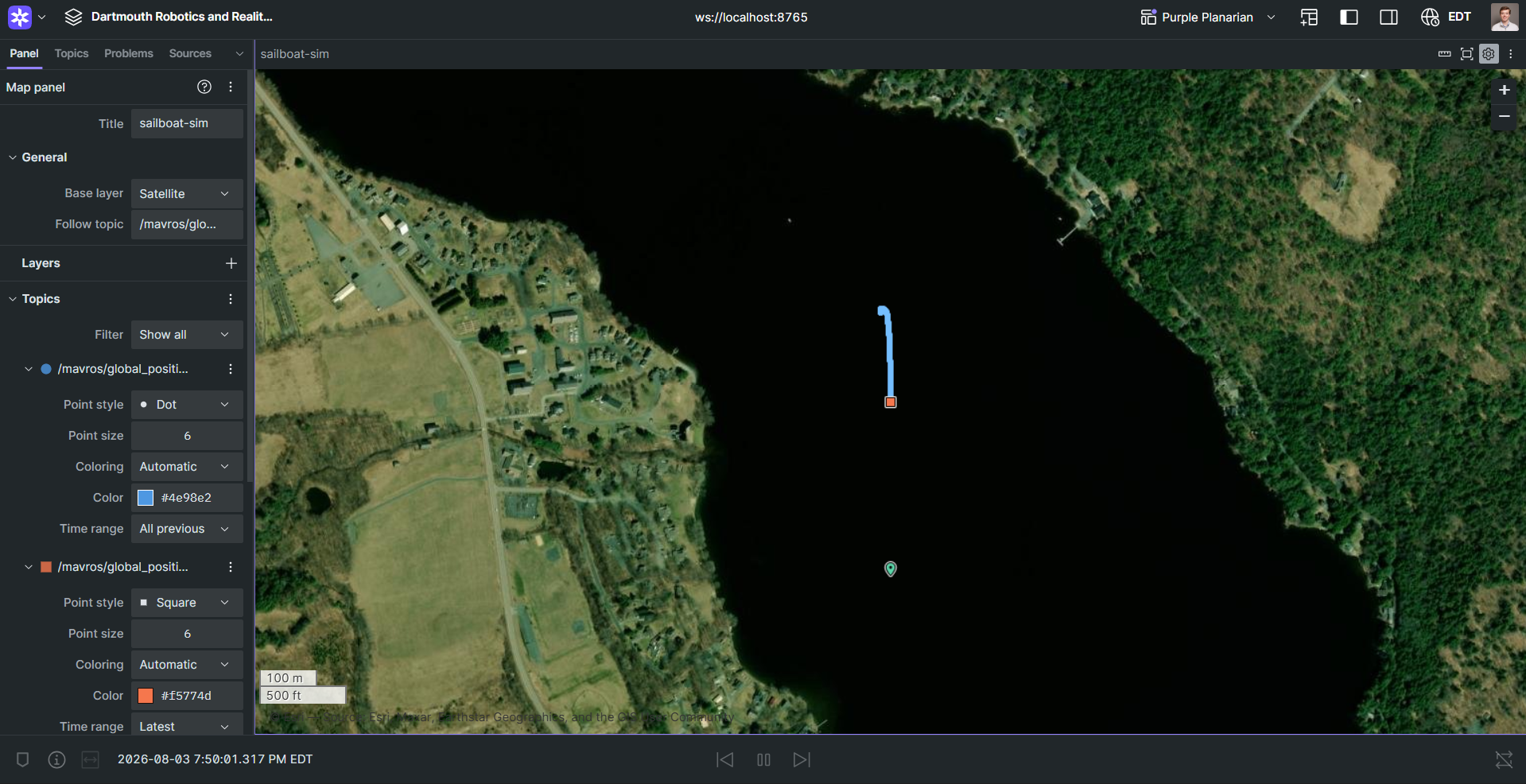
Foxglove studio visualization of the simulated boat (red square) and its target waypoint (green pin)
After much debugging and bench testing, the boat successfully worked in semi-autonomous mode on a pond, where I provided the steering and the boat automatically adjusted the sail trim and executed a tack with one button press. Going forward, the boat will require further work to eliminate magnetic interference by moving the GPS/compass unit away from high powered peripherals. After this, the next important step is to connect the Raspberry Pi companion computer to validate existing path planning algorithms and ensure the consistency of the system.